
What else does Salzburg have to offer besides the festival?
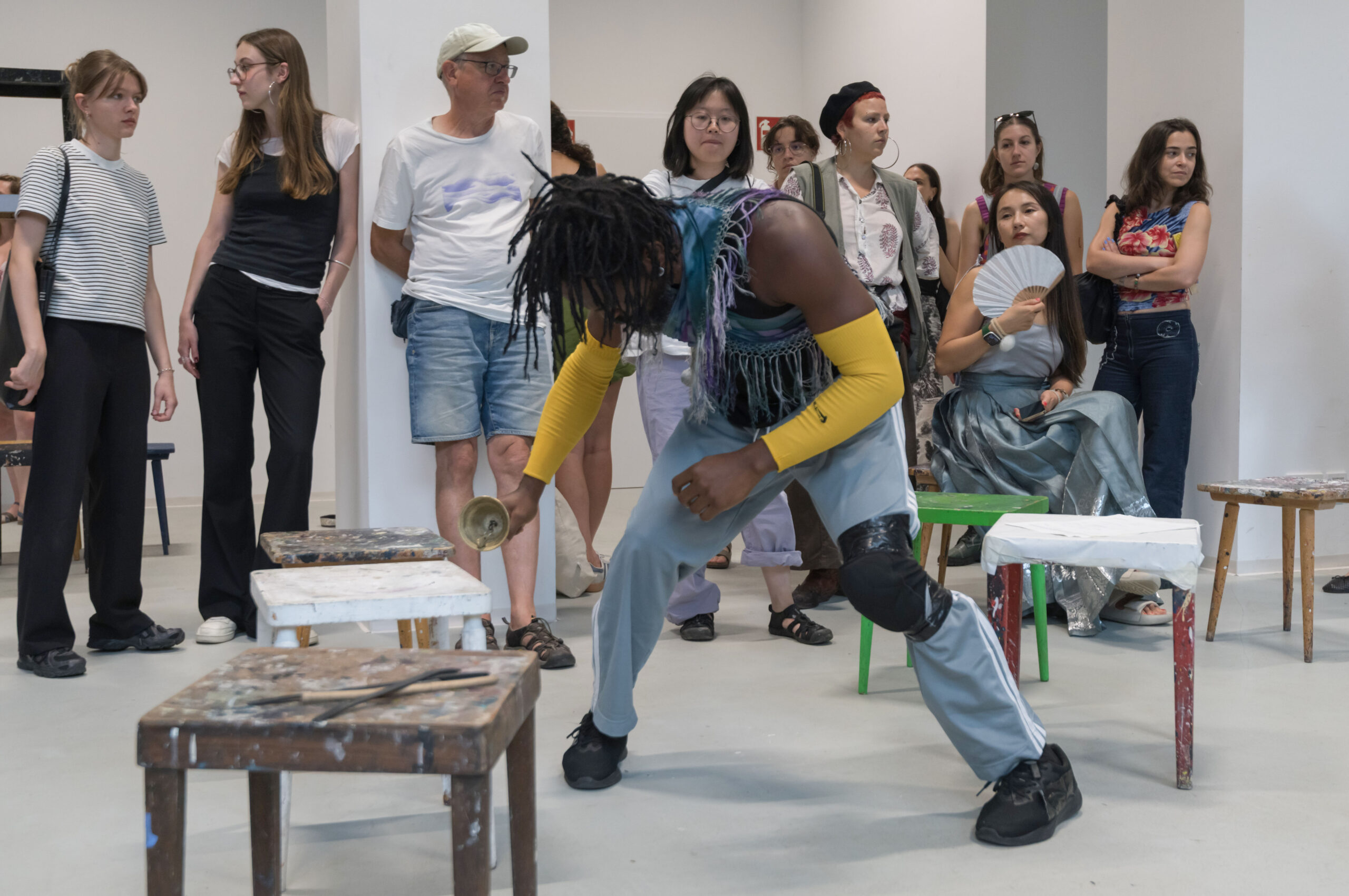
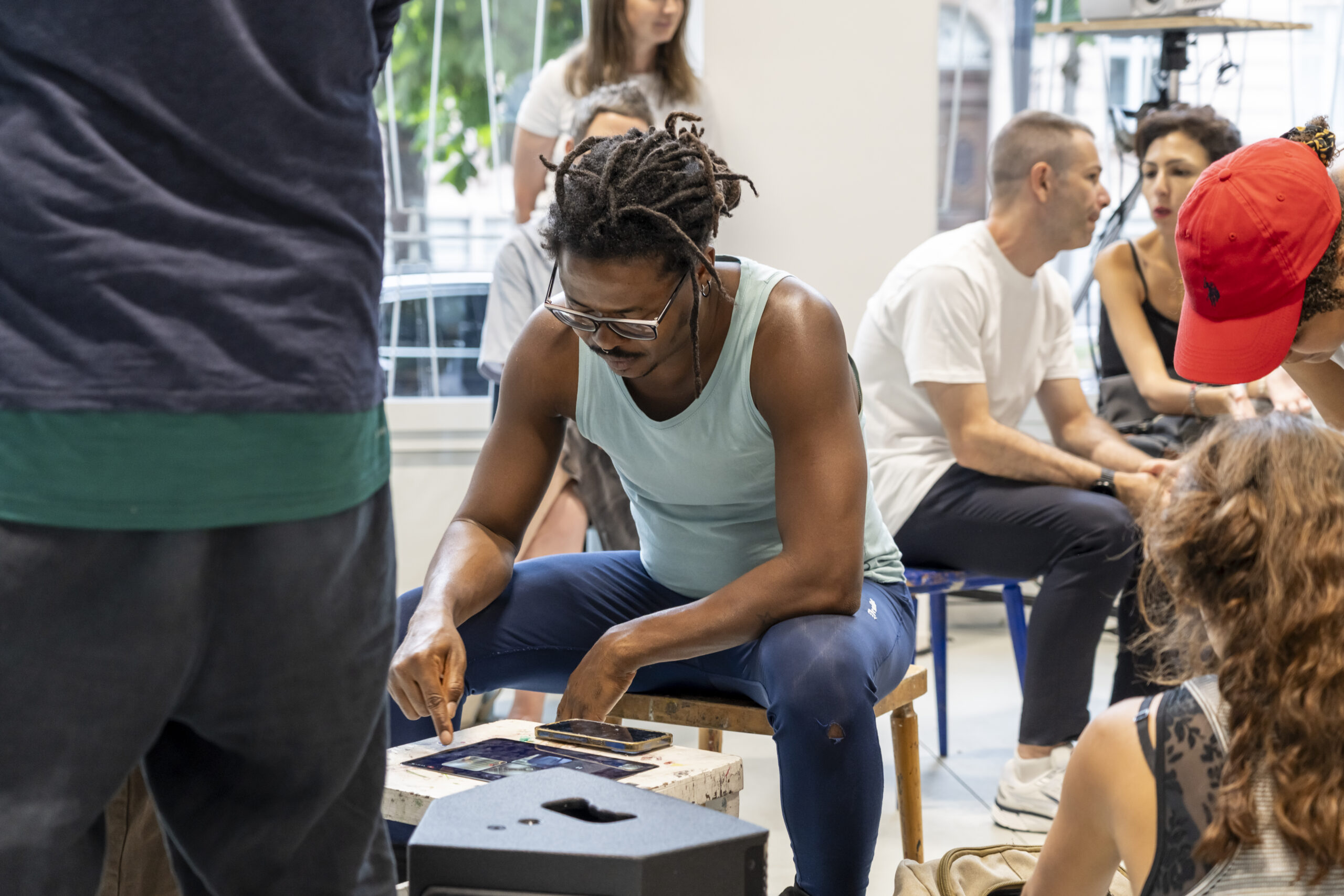
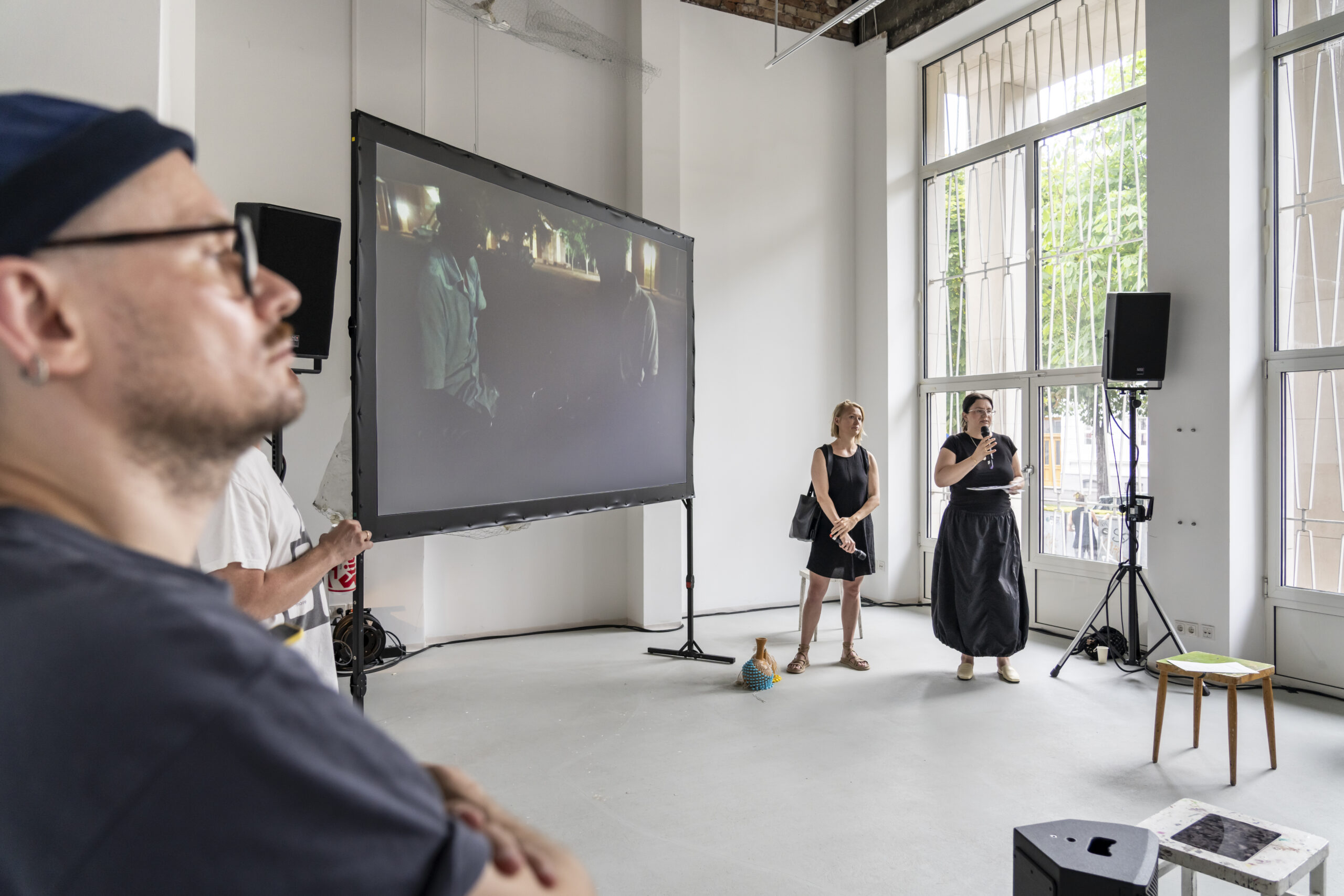
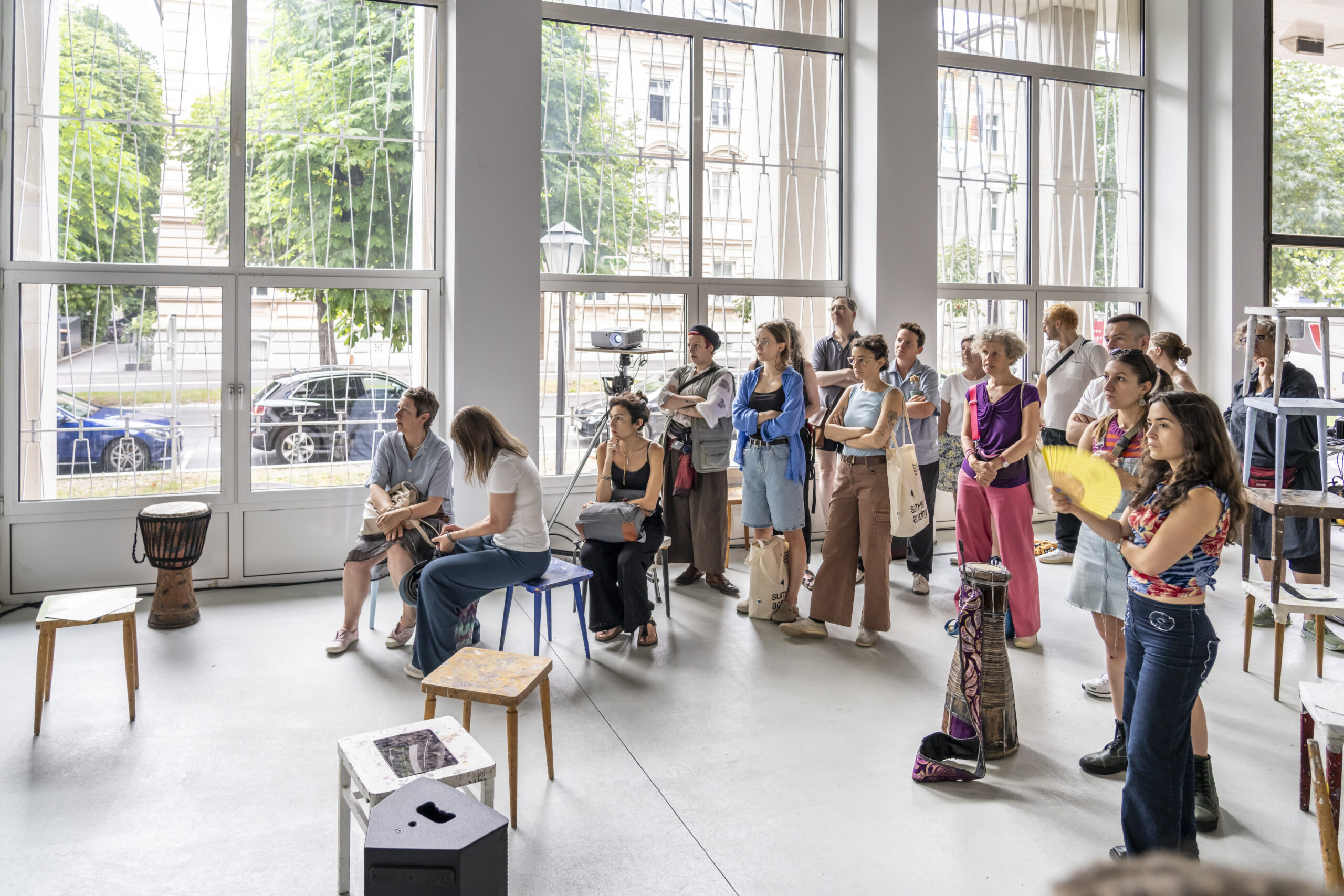
In summer, Salzburg is best known for its famous festival. But beyond the major stages, another – no less relevant – kind of artistic engagement takes place: the International Summer Academy of Fine Arts. Thanks to our collaboration, we were able to organise a three-week workshop in which an international group of artists explored questions that are also central to our work: How can we live together? What borders separate us, and which of them do we carry within ourselves?
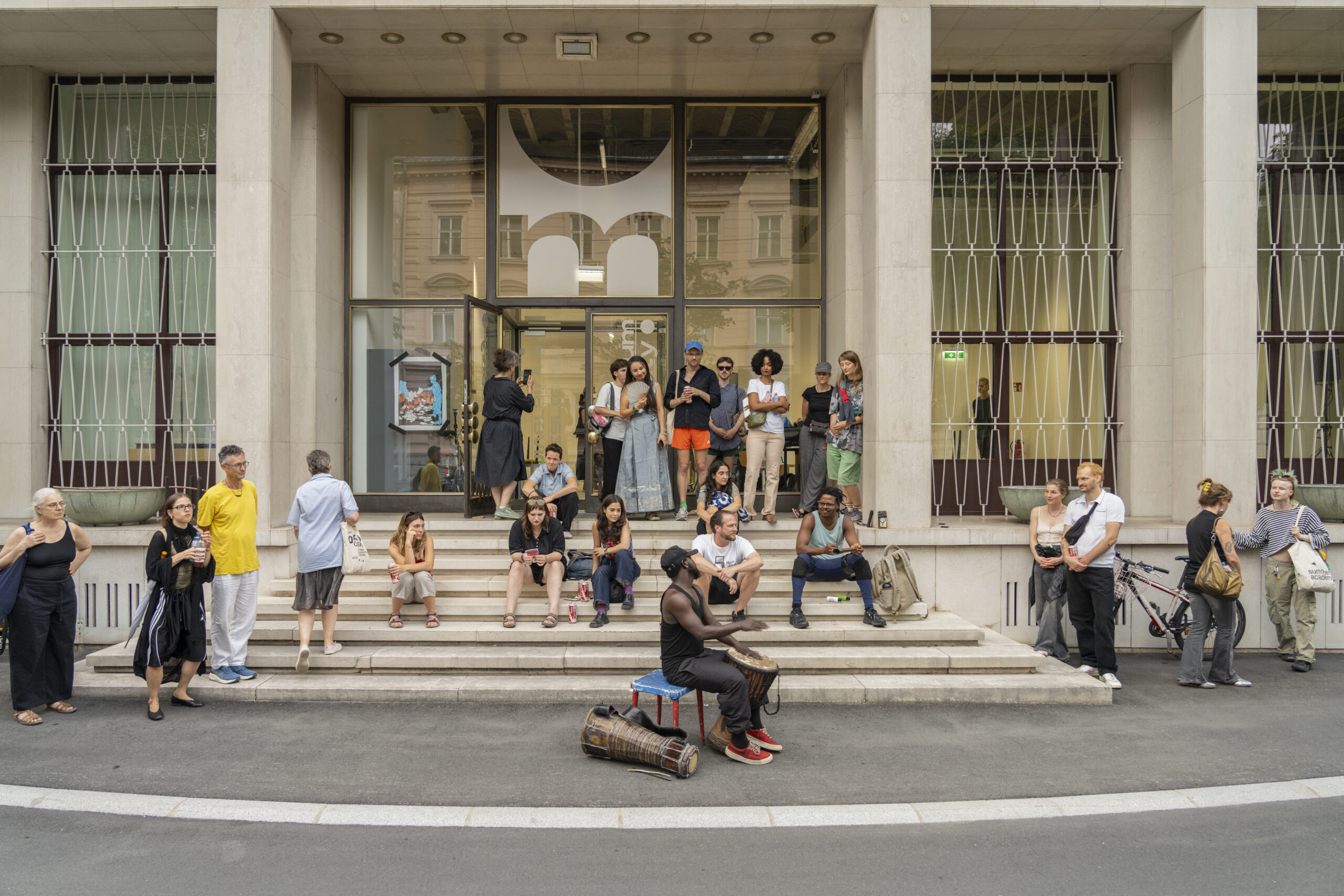
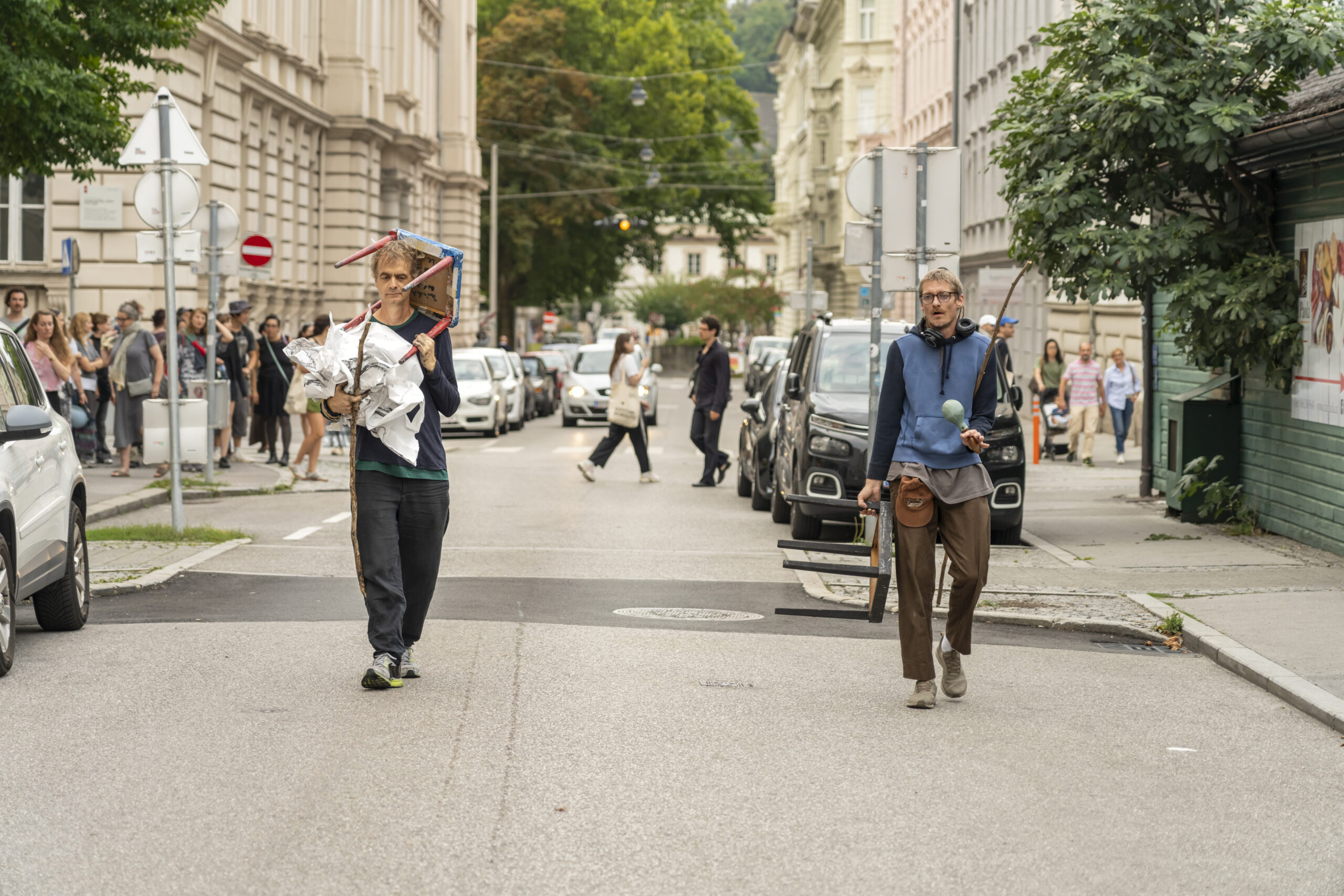
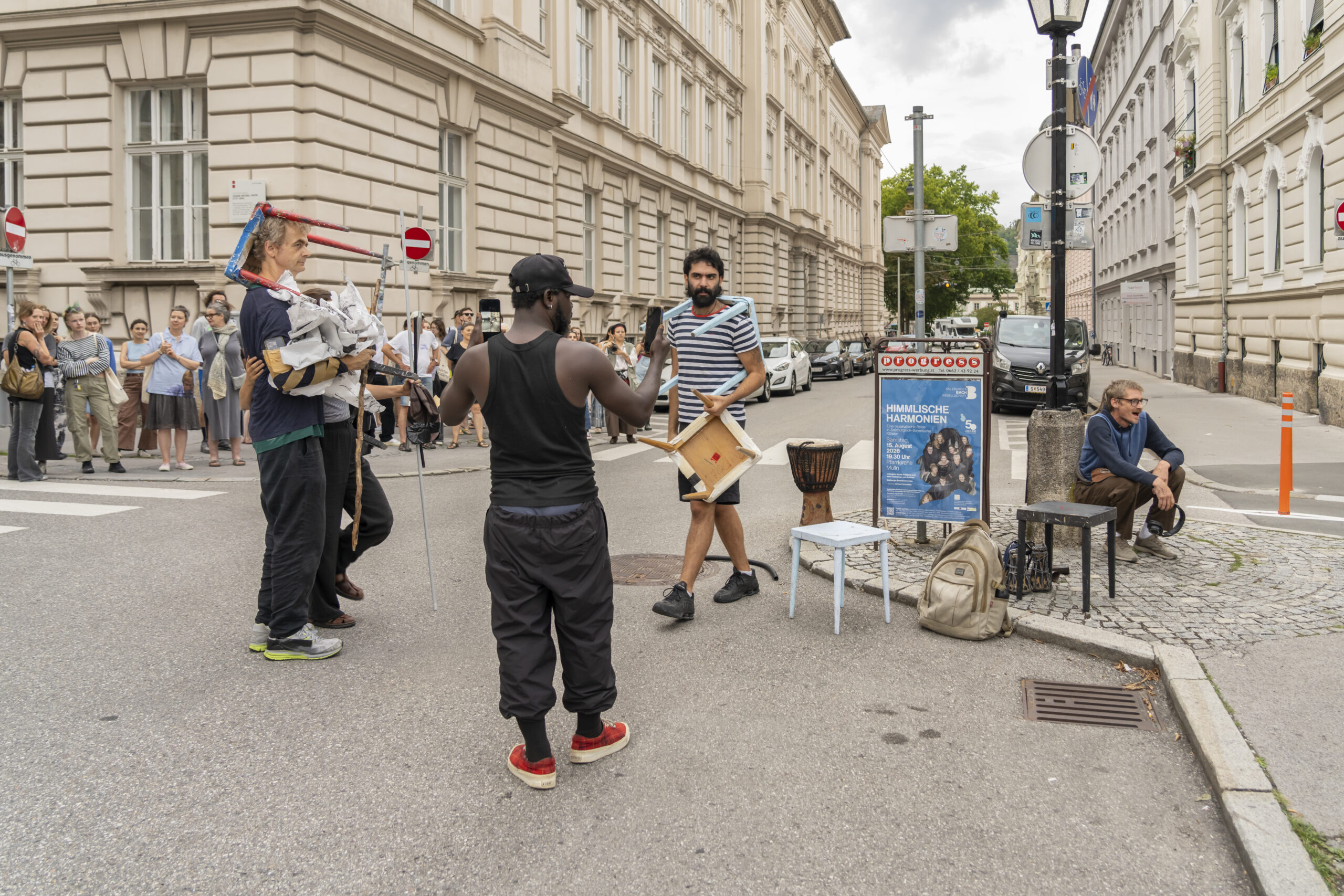
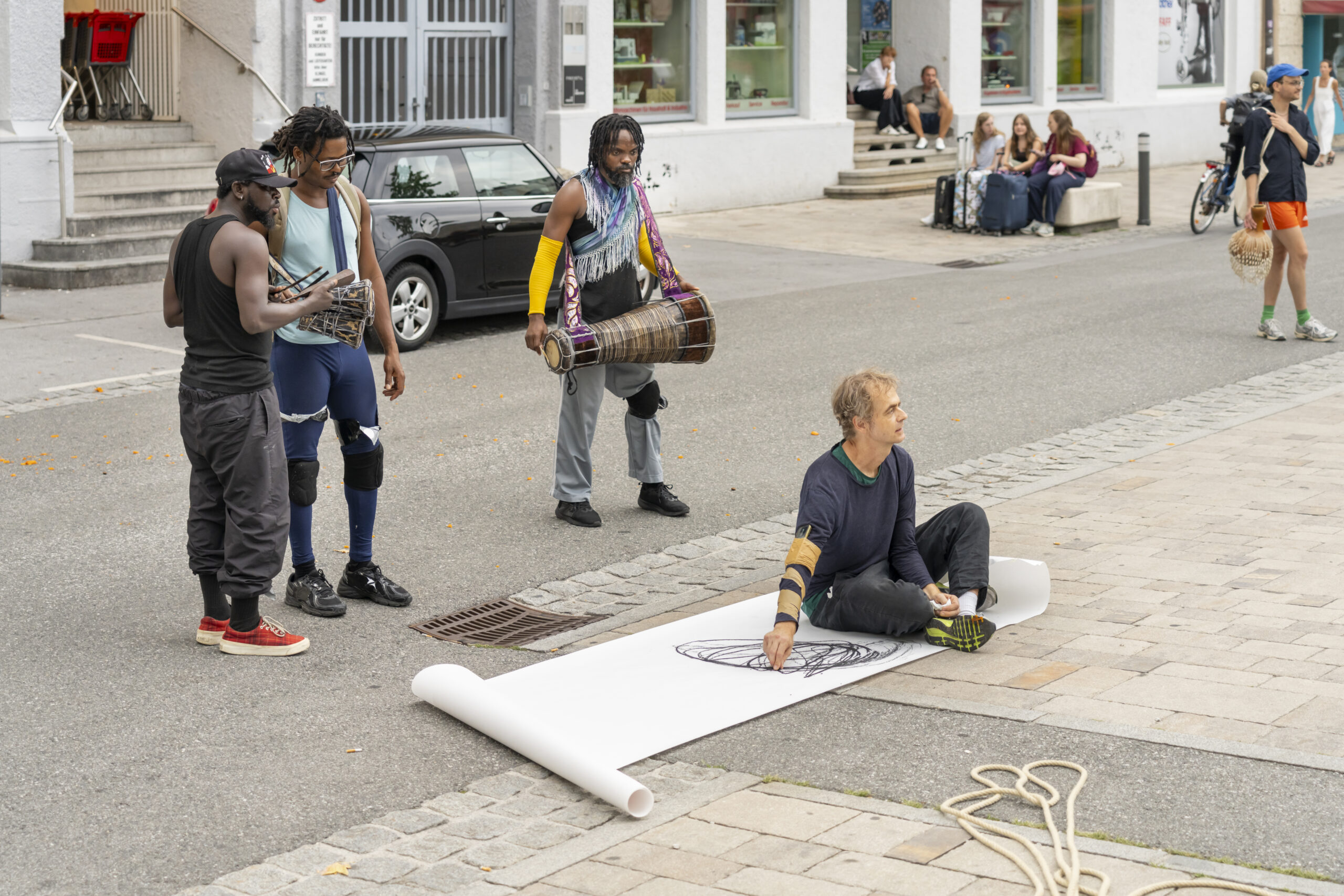
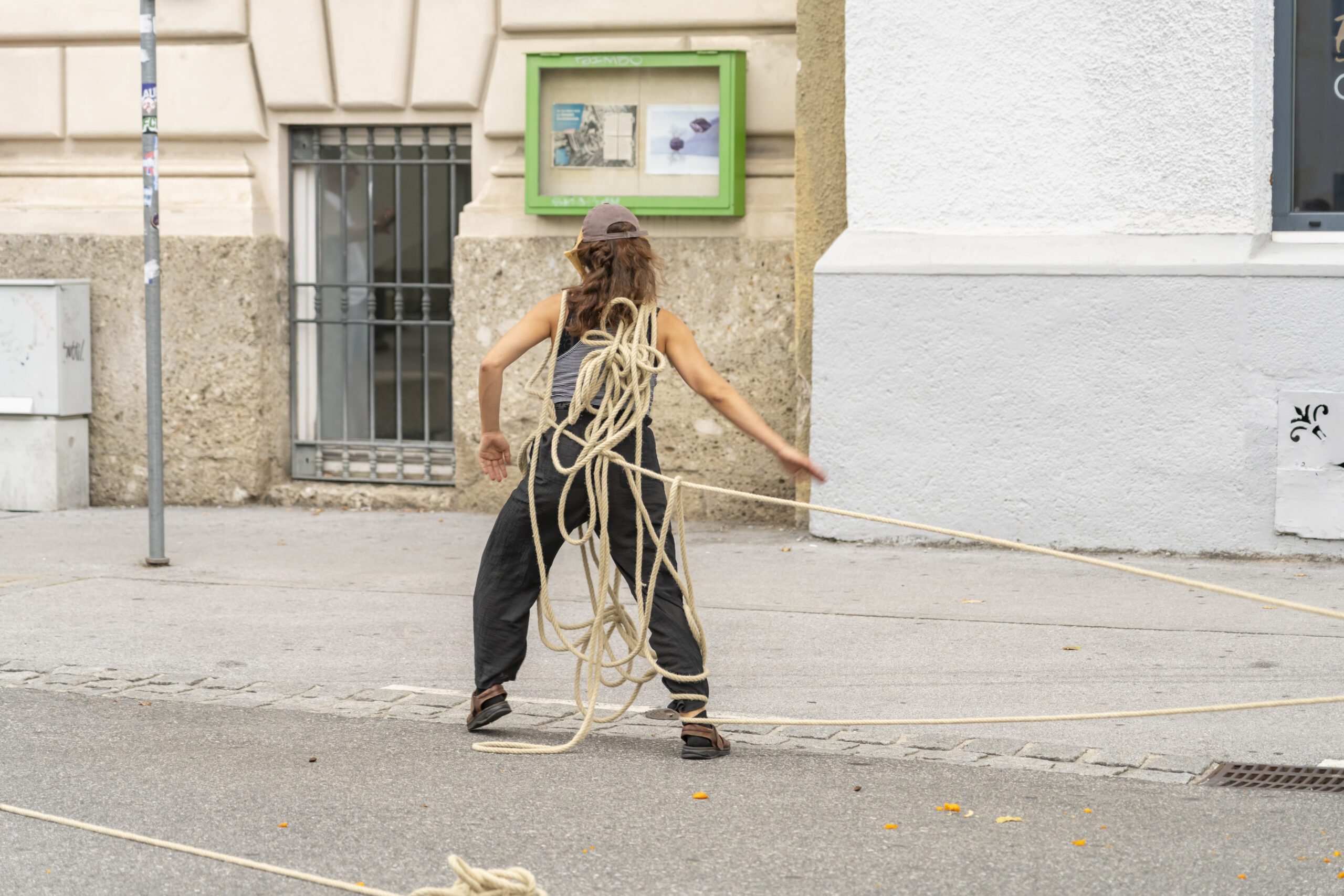
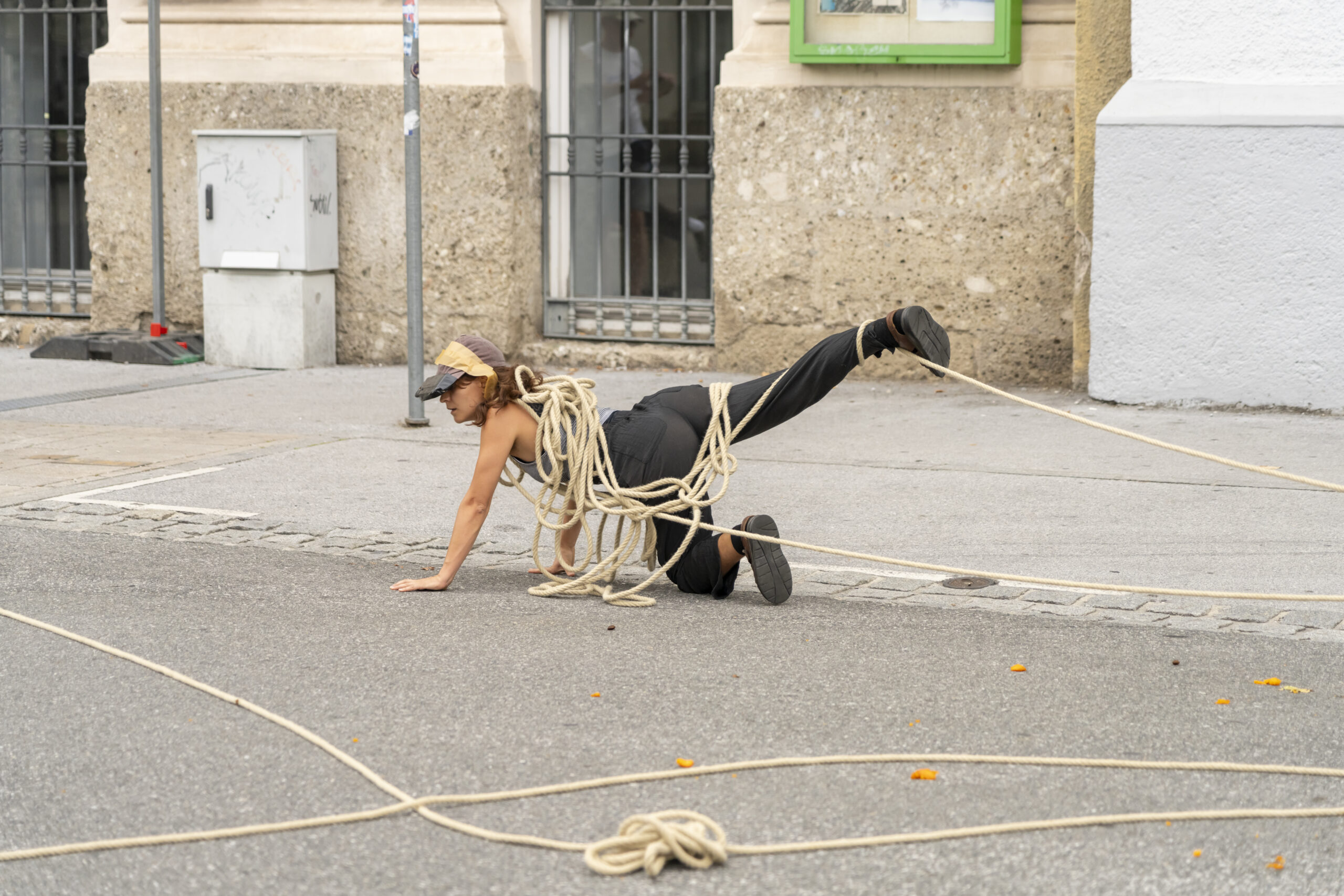
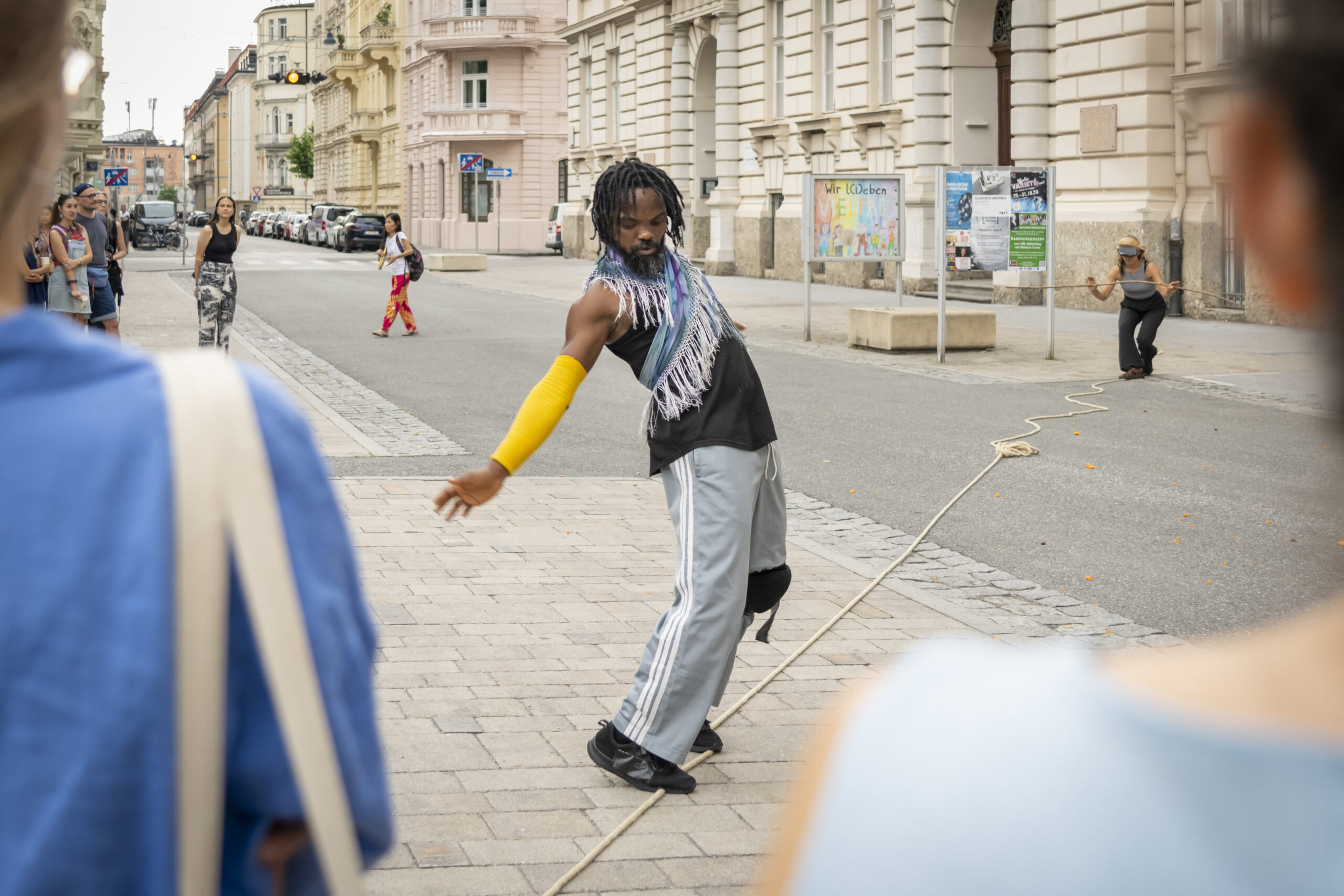
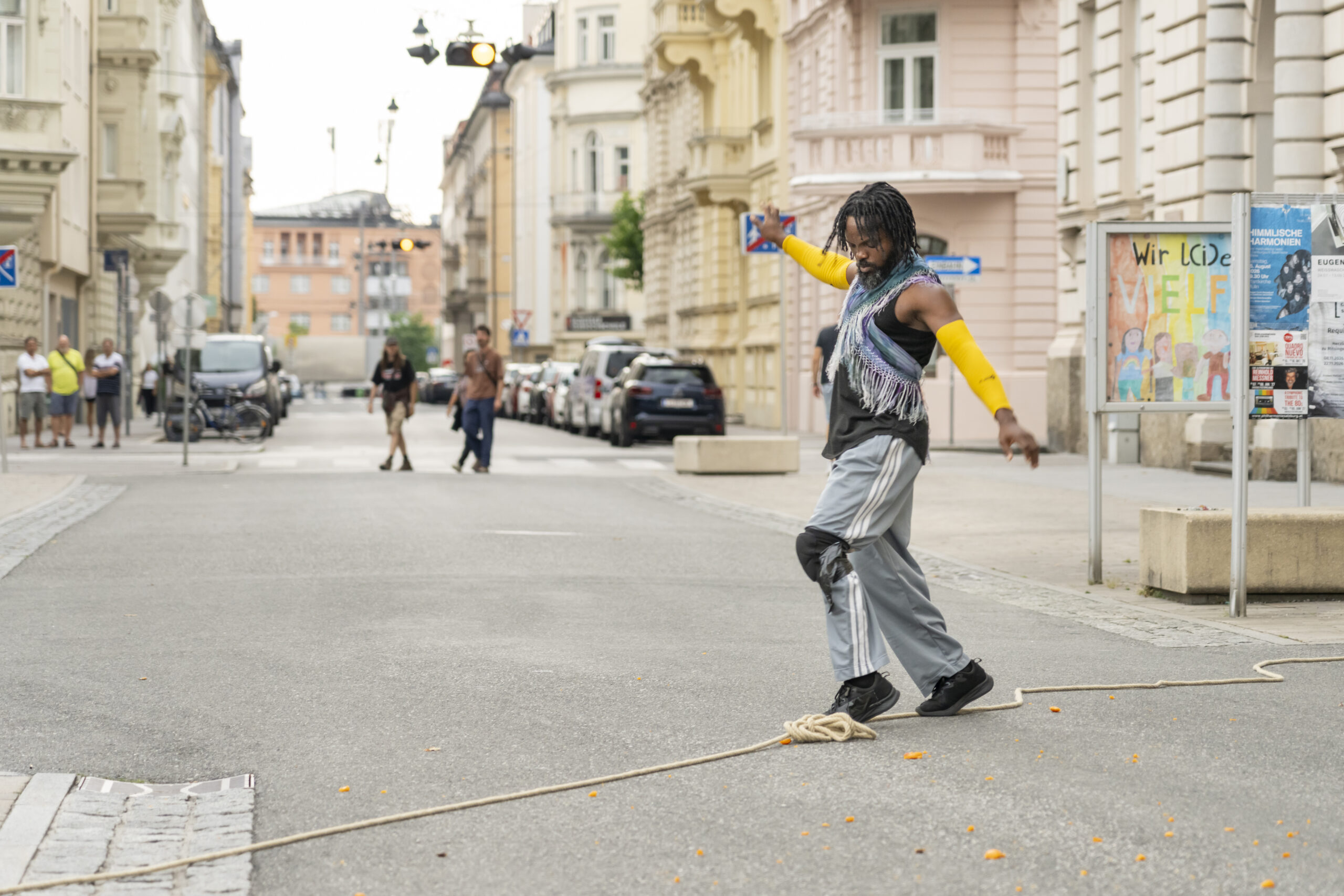
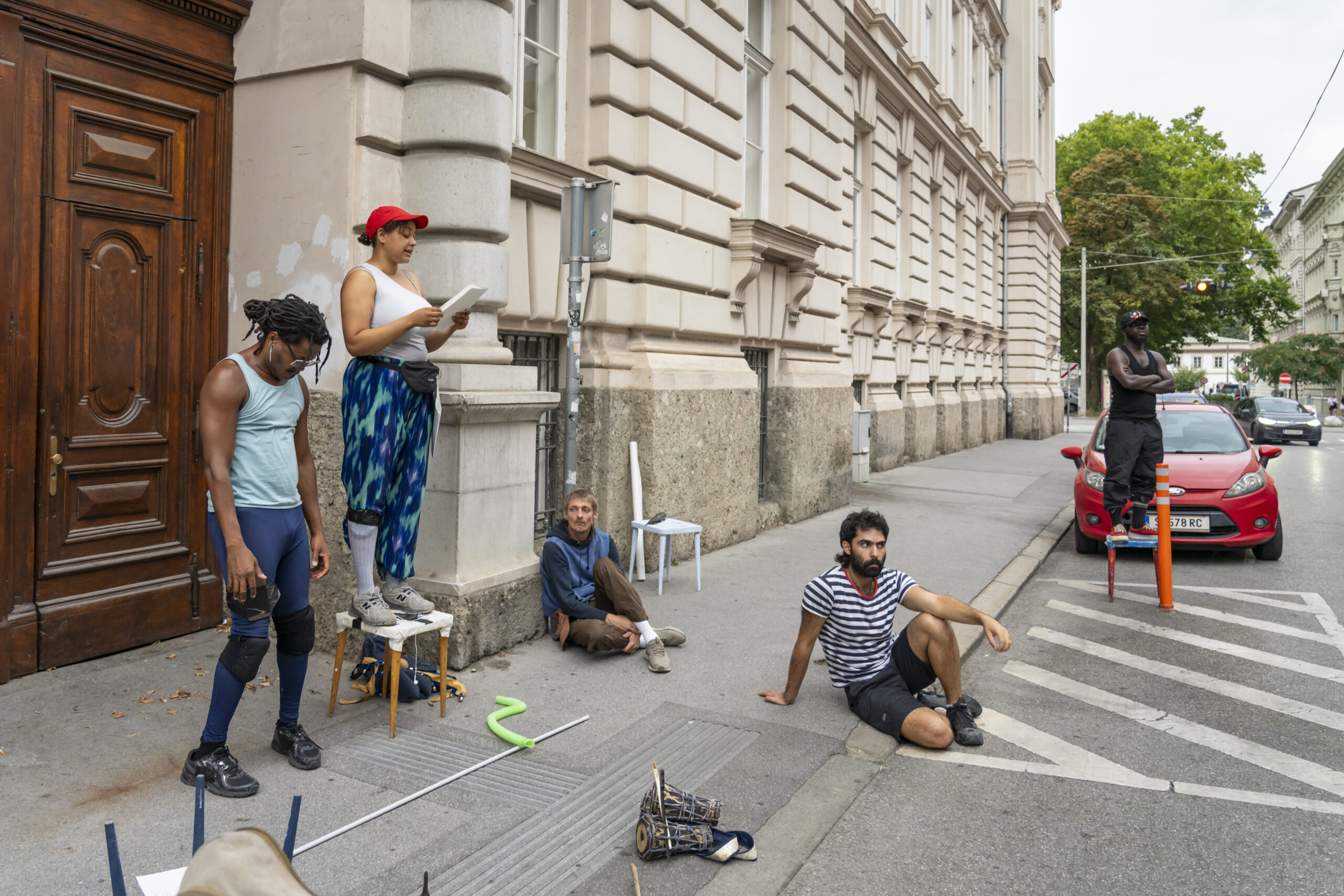
The workshop began with questions around colonialism, borders and living together as a society. Which boundaries are imposed upon us, and which do we create ourselves? And how can we remain connected while questioning existing political, social and institutional structures? In this sense, the project connected with an idea that also shapes the work of the Opera Village: art as a space for encounter and collective thinking. Not only on a stage, but in the midst of everyday life. Not as a ready-made answer, but as an opportunity to ask questions together, to experiment with new ways of being together – and perhaps even to argue with one another. The results of the workshop were therefore deliberately not presented in a conventional theatre or exhibition space. Parks, streets and even supermarkets in Salzburg became temporary stages. Because art also needs to go where people are. Especially when access to cultural spaces cannot be taken for granted by everyone, when ticket prices, social barriers or the feeling of “not belonging” keep people away from cultural institutions, public space becomes an important place for artistic encounter.
Art in public space can lower these thresholds. It meets people where they go about their everyday lives and creates opportunities to experience art without first having to cross a door, a ticket counter or an institutional boundary. Passers-by were free to stop, watch, walk on or become part of the performance themselves. Through these performative interventions, public space was transformed for a moment into a place of encounter. The project explored how connection can emerge – through listening, moving together, sharing, attention and mutual presence. Borders were understood not only as political or geographical lines, but also as social and personal experiences that shape our everyday lives and relationships.
What emerged in Salzburg can therefore also be understood as a small experiment in what the Opera Village repeatedly seeks to do: to create spaces where people come together, differences become visible and new forms of living together can emerge. Spaces that are not accessible only to a privileged few, but open themselves up, enter into everyday life and make encounter possible.
A big thank you goes to the workshop facilitators Taiwo Ojudun, Enechukwu Uche and Damilola Orukotan, and to the participating artists Christoph Lammars, Alma Mariana Camara, Busayo Olowu, Camilla Prey, Franzisca Zauner, Kasra Ghaffari and Morten Almass for their openness, energy and shared artistic work.
We would also like to thank Martina Berger-Klingler and the entire team of the Summer Academy of Fine Arts Salzburg for the wonderful collaboration and cooperation. Our special thanks go to Paul Feigelfeld from Mozarteum Salzburg for his support of the presentation.
And last but not least, we thank the Land Salzburg for funding the project and making this collaboration and artistic research possible.
Featured image © Mira Turba / Summeracademy Salzburg
All other photos © Zeynep Fırat